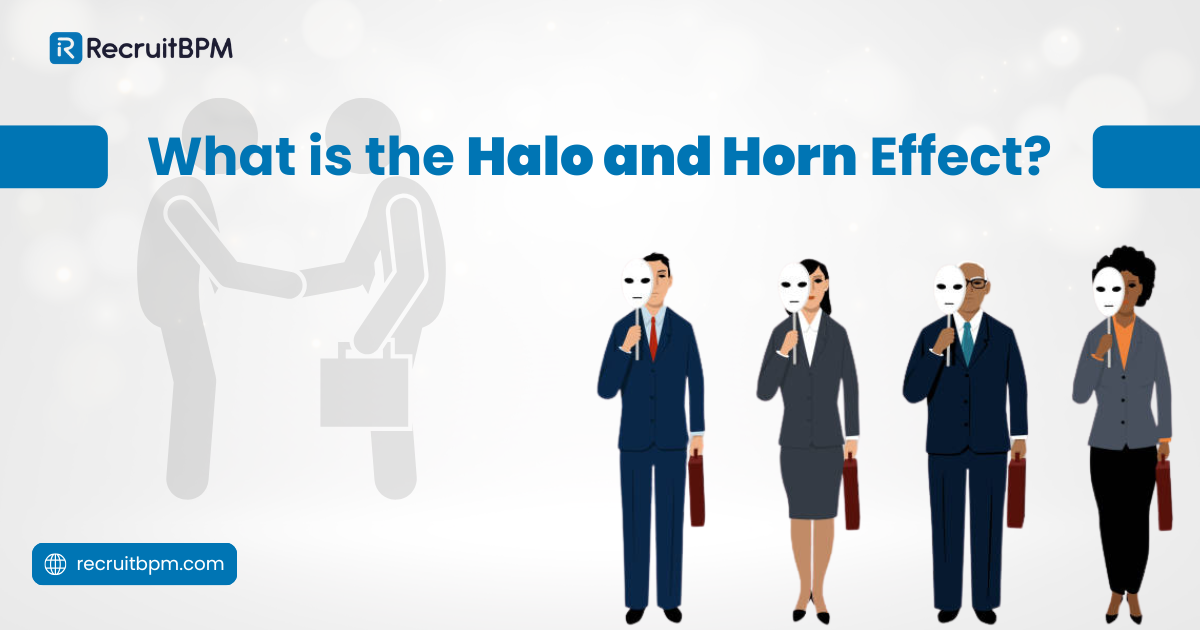
First impressions shape hiring decisions more than most recruiters realize. Studies show that 42% of hiring managers admit unconscious bias influences their recruitment choices. For staffing agencies, these cognitive biases don’t just affect individual placements—they impact client relationships, candidate quality, and your firm’s bottom line.
Understanding the Halo Effect in Recruitment
The halo effect occurs when one positive trait overshadows a candidate’s entire profile. Coined by psychologist Edward Thorndike in 1920, this cognitive bias leads recruiters to assume multiple positive qualities based on a single impressive characteristic.
In staffing firms, the halo effect manifests during resume screening and interviews. A candidate from a prestigious university might receive preferential treatment, even without relevant experience. Similarly, strong communication skills can mask technical deficiencies that become problems after placement.
This bias creates blind spots in your talent acquisition process. You might overlook red flags or skip thorough background checks because one positive trait influenced your judgment.
What Is the Horn Effect in Hiring?
The horn effect represents the opposite problem in recruitment. When recruiters notice one negative characteristic, they unconsciously attribute other negative traits to the candidate. This reverse halo effect can eliminate qualified candidates from your pipeline.
Common triggers include arriving late to interviews, unconventional appearance choices, or gaps in employment history. These surface-level observations lead to assumptions about work ethic, reliability, or cultural fit—none of which may be accurate.
For staffing agencies, the horn effect disproportionately impacts candidates from marginalized backgrounds. Research shows that minority applicants who remove racial identifiers from resumes receive twice as many interview callbacks. This unconscious bias in recruitment directly undermines diversity initiatives.
The Psychology Behind First Impression Biases
Cognitive biases exist because your brain seeks efficiency. Processing thousands of applications creates time pressure that forces quick decisions. Instead of a comprehensive analysis, your brain uses mental shortcuts based on pattern recognition.
These hiring decision biases happen automatically. Even experienced recruiters with years of training fall victim to the halo and horn effect. The challenge isn’t eliminating human nature—it’s implementing systems that counteract these natural tendencies.
Time constraints amplify the problem. When staffing firms face urgent client demands, recruiters rely more heavily on first impressions and intuitive judgments rather than objective evaluation criteria.
How These Biases Impact Staffing Agencies?
Unconscious bias in recruitment creates measurable business consequences. Bad hires cost companies up to 30% of an employee’s first-year salary. For staffing agencies, poor placements damage client relationships and reduce repeat business.
The horn effect particularly hurts diversity recruiting efforts. When qualified candidates receive unfair evaluations based on superficial characteristics, your talent pool narrows. This limits your ability to meet client diversity requirements.
These cognitive biases also affect your brand reputation. Candidates share experiences online and through professional networks. Unfair treatment during interviews creates negative reviews that discourage future applicants from working with your firm.
Client satisfaction suffers when placements don’t meet expectations. The halo effect leads to overestimating candidate capabilities, resulting in performance issues that reflect poorly on your screening process.
Proven Strategies to Overcome Recruiting Bias
Eliminating hiring bias requires systematic changes to your recruitment process. Anonymous application screening removes identifying information that triggers unconscious bias. Names, photos, ages, and educational institutions disappear during initial reviews.
Structured interview processes create consistency across candidates. Develop standardized questions that assess job-specific competencies. Every candidate answers identical questions, allowing fair comparison based on actual qualifications rather than first impressions.
Diverse interview panels reduce individual bias impact. Multiple perspectives catch assumptions that single interviewers miss. When panel members represent different backgrounds, they challenge each other’s unconscious biases during candidate evaluation.
Skills-based assessment tools provide objective performance data. Pre-employment tests measure actual abilities rather than perceived potential. This data-driven hiring approach removes subjective judgment from early screening stages.
Standardized evaluation criteria establish clear benchmarks. Create scoring rubrics that rate specific competencies on numerical scales. This framework forces objective analysis instead of intuitive feelings about candidate fit.
How RecruitBPM Helps Eliminate Unconscious Bias?
Modern recruitment technology addresses cognitive bias through automation and structure. RecruitBPM’s AI-powered candidate screening analyzes qualifications without human preconceptions influencing initial reviews.
The platform’s workflow automation ensures every candidate follows identical evaluation steps. Customizable assessment criteria let you define objective benchmarks before meeting candidates. This prevents post-hoc justification of biased first impressions.
Built-in collaboration features facilitate diverse panel reviews. Multiple recruiters can evaluate candidates using shared rubrics, with the system tracking individual scores and highlighting discrepancies for discussion.
Analytics and reporting tools identify bias patterns in your hiring funnel. When certain candidate demographics consistently advance or get eliminated at specific stages, you can investigate potential unconscious bias affecting those decisions.
The customizable nature means you can implement blind resume screening, remove unnecessary requirements that disadvantage marginalized candidates, and focus evaluation on skills that actually predict job performance.
Building a Bias-Free Recruitment Process
Training programs increase awareness of the halo and horn effect among your recruiting team. Regular workshops help identify personal biases and develop strategies to counteract them during candidate evaluation.
Standardized job descriptions focus on essential skills rather than subjective preferences. Remove requirements like “culture fit” that often mask unconscious bias. Instead, specify measurable competencies the role requires.
Implementing blind resume reviews during initial screening prevents physical appearance, names, and demographic information from influencing decisions. Focus exclusively on qualifications, experience, and demonstrated skills.
Clear evaluation rubrics remove ambiguity from assessment. Define what “excellent,” “good,” and “poor” mean for each competency. Numeric scoring systems force objective comparison rather than relying on feelings about candidates.
Regular bias audits examine your hiring data for patterns. Track which candidates advance through each stage, comparing demographics against your applicant pool. Disparities indicate where unconscious bias may be affecting decisions.
The Business Case for Unbiased Hiring
Companies with diverse workforces perform better financially. Research shows that diverse teams are 19% more likely to drive above-average revenue. For staffing firms, delivering diverse candidate pools becomes a competitive advantage.
Improved candidate quality emerges when you evaluate fairly. The best talent doesn’t always come from traditional backgrounds. Reducing unconscious bias expands your available talent pool significantly.
Enhanced client satisfaction follows better placements. When candidates succeed in their roles, clients return for future staffing needs. Your reputation grows as a firm that consistently identifies high performers.
Reduced turnover rates save money for both your firm and clients. Candidates selected through unbiased processes fit roles based on actual qualifications rather than superficial characteristics.
Transform Your Recruiting Process Today
The halo and horn effect represent significant challenges for staffing agencies. These cognitive biases affect every stage of recruitment, from resume screening through final placement decisions. Recognition alone doesn’t solve the problem—systematic changes to your process do.
Technology platforms like RecruitBPM provide the structure needed to counteract unconscious bias. AI-driven screening, standardized workflows, and objective evaluation frameworks transform subjective hiring into data-driven talent acquisition.
Your next step is implementing bias reduction strategies throughout your recruitment process. Start with anonymous screening, add structured interviews, and track results through analytics. The candidates you might have overlooked could become your most successful placements.
Ready to eliminate unconscious bias from your hiring process? Discover how RecruitBPM’s AI-powered platform transforms recruitment for staffing firms. Schedule a demo today and see objective candidate evaluation in action.