Choosing the wrong interview format can cost you strong candidates and waste your hiring team’s time. Two of the most common formats, group interviews and panel interviews, often get confused, yet they serve very different purposes. Understanding a group interview vs panel interview approach helps recruiters pick the right method for every role. This guide breaks down how each format works, when to use it, and how to run either one without slowing down your hiring process.
What Is a Group Interview?
A group interview brings multiple candidates into the same room at the same time to be evaluated together. Recruiters use this format to observe how candidates interact, communicate, and handle pressure alongside their peers. It is a fast way to screen a large applicant pool in a single session.
How a Group Interview Works?
In a typical group interview, one or two interviewers guide a room of candidates through shared exercises, discussions, or role play scenarios. Candidates might be asked to solve a problem together or debate a topic while interviewers take notes on individual contributions. The format rewards candidates who can stand out without dominating the conversation.
Interviewers usually watch for leadership signals, listening skills, and how well each person collaborates. Since everyone is being judged against the same prompt, comparisons between candidates happen naturally and in real time.
When Employers Use Group Interviews?
Group interviews work best for high volume hiring, such as retail, hospitality, call centers, or seasonal roles where many similar positions need to be filled quickly. They are also common for internships and entry level jobs where soft skills matter more than deep technical knowledge.
Employers lean on this format when time is limited and the goal is to narrow a large candidate pool before moving finalists into deeper, one on one conversations.
What Is a Panel Interview?
A panel interview is a single candidate meeting with multiple interviewers at once, usually representing different departments or levels of seniority. Instead of comparing candidates against each other, a panel evaluates one person from several professional perspectives simultaneously.
How a Panel Interview Works?
During a panel interview, three to six interviewers typically sit together and take turns asking questions. A hiring manager might focus on role specific skills while a peer asks about collaboration and a senior leader probes strategic thinking. The candidate answers each question in front of the full group.
This structure lets the hiring team compare notes immediately after the interview, which often speeds up the decision process. It also gives candidates a clearer sense of who they would actually work with day to day.
When Employers Use Panel Interviews?
Panel interviews are common for mid level to senior roles, technical positions, and jobs where cross functional buy in matters. Companies use them when a hire will interact with multiple teams and everyone needs a voice in the final decision.
This format also reduces individual interviewer bias, since several people are evaluating the same responses and can challenge each other’s impressions before a decision is made.
Group Interview vs Panel Interview: Key Differences?
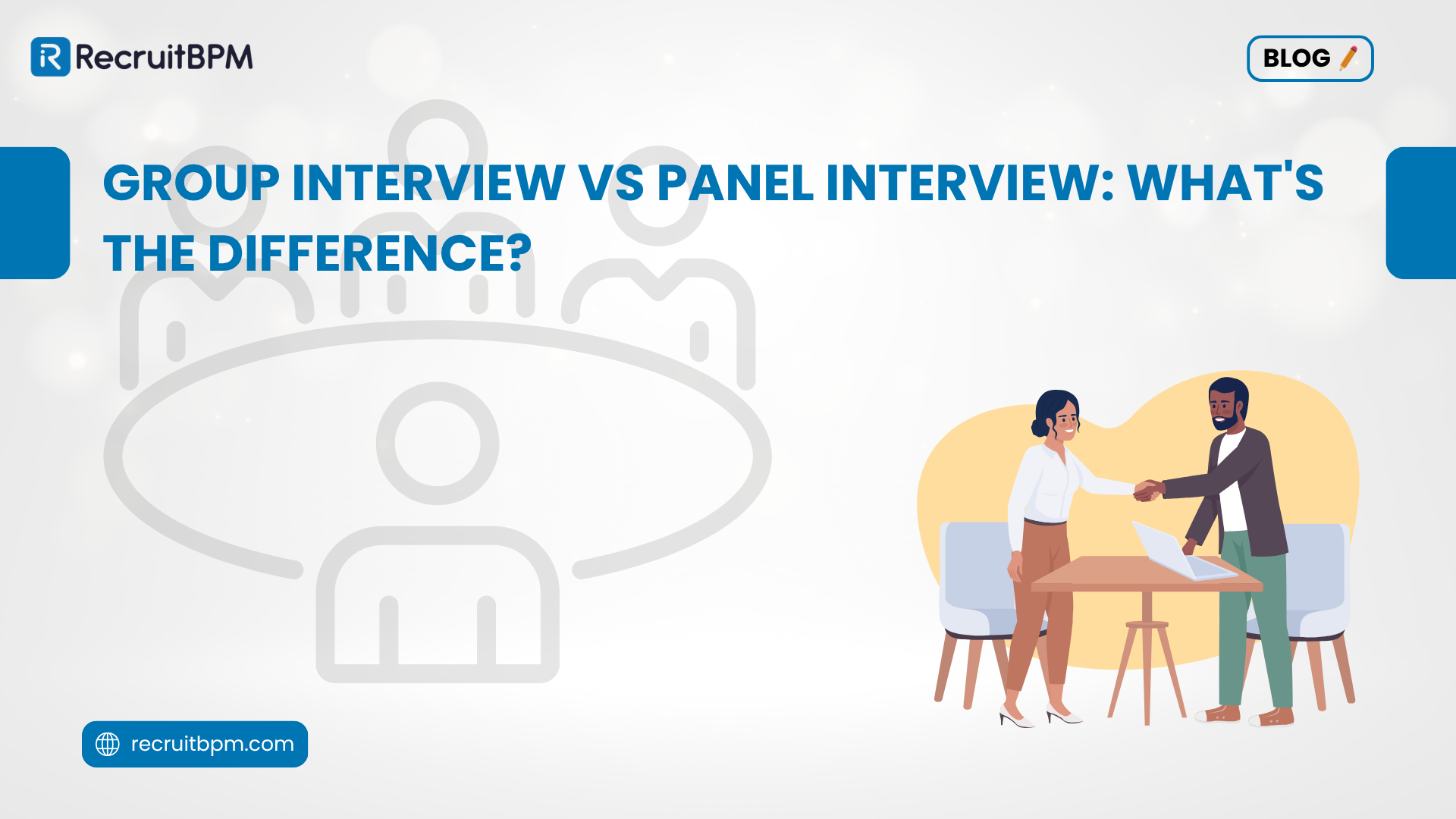
The core difference comes down to who is in the room. A group interview places multiple candidates in front of one or two interviewers, while a panel interview places one candidate in front of multiple interviewers. That single structural difference shapes everything else about the experience.
Number of Candidates and Interviewers
Group interviews flip the usual ratio, with many candidates and few interviewers. Panel interviews keep the traditional one candidate setup but multiply the interviewers instead. This changes the pressure each candidate feels and what they are actually being measured against.
Interview Format and Structure
Group interviews often include collaborative exercises, timed activities, or open discussion, since the goal is to see interaction. Panel interviews follow a more traditional question and answer format, though questions rotate between different interviewers instead of coming from just one person.
Evaluation Criteria
Group interviews focus heavily on soft skills such as communication, teamwork, and initiative under social pressure. Panel interviews dig deeper into role specific competencies, since each interviewer usually represents a different area of expertise the candidate needs to satisfy.
Which Interview Format Should Recruiters Choose?
There is no single right answer here. The best format depends on the role, the hiring volume, and how much collaboration the position actually requires.
Best Use Cases for Group Interviews
Choose a group interview when you are filling several identical roles at once, when soft skills and cultural fit matter more than technical depth, or when your candidate pool is large and you need to screen quickly. Retail associates, customer service representatives, and campus recruiting drives are strong fits.
Best Use Cases for Panel Interviews
Choose a panel interview when the role requires sign off from multiple stakeholders, when technical or specialized skills need expert evaluation, or when you are hiring for a leadership position. Panels work well anytime the person you hire will report to or work closely with more than one team.
How Can Recruiters Manage Group and Panel Interviews Efficiently?
Running either format well takes more coordination than a standard one on one interview, and that is exactly where the right recruiting software makes the difference.
Scheduling Multiple Interviewers and Candidates
Coordinating calendars for several interviewers or several candidates at once is one of the biggest friction points in both formats. RecruitBPM’s scheduling tools sync interviewer availability automatically, so your team spends less time chasing calendar invites and more time preparing questions.
Tracking Feedback and Scorecards in One Place
When multiple people are evaluating the same candidate, feedback can get scattered across emails and sticky notes. Centralized scorecards inside RecruitBPM let every interviewer log their evaluation in one shared system, making it easy to compare notes and reach a decision faster.
Reducing Time to Hire with Structured Interview Workflows
Structured workflows keep group and panel interviews consistent from one round to the next, which protects you from bias and missed steps. RecruitBPM’s applicant tracking system organizes every stage of the interview process, from scheduling to feedback to final offer, so nothing falls through the cracks.
Final Thoughts on Choosing the Right Interview Format
Group interviews and panel interviews solve different hiring problems. One helps you move quickly through a large applicant pool, while the other brings deeper, multi perspective evaluation to a single candidate. Knowing which one fits your open role is the first step toward a smoother, more accurate hiring process.
Key Takeaways
Group interviews suit high volume, soft skill focused hiring, while panel interviews suit specialized or leadership roles that need input from several stakeholders. Matching the format to the role saves time and improves the quality of your final hire.
Next Steps for Recruiters
If coordinating interviewers, candidates, and feedback across formats is slowing your team down, it might be time for a system built to handle it. See how RecruitBPM brings scheduling, scorecards, and structured workflows into one platform. Book your live demo today and watch your interview process run itself.