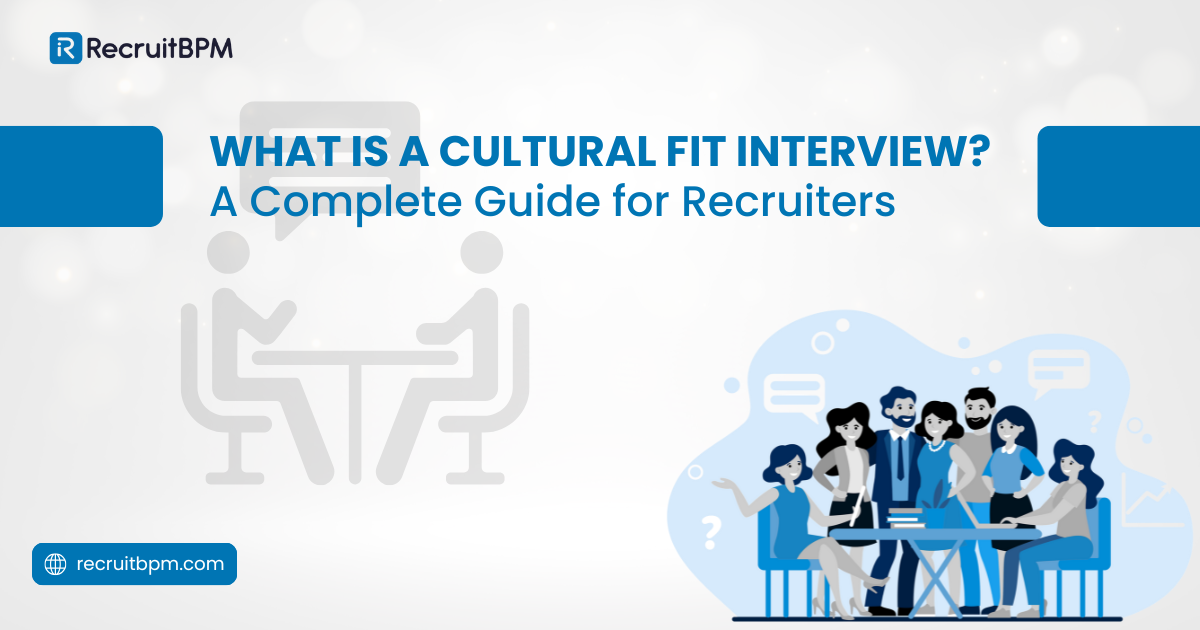
Hiring the right talent goes beyond matching resumes to job descriptions. Organizations increasingly recognize that skills alone don’t guarantee success. The missing piece? Cultural alignment. This is where cultural fit interviews become essential.
Understanding Cultural Fit in Recruitment
A cultural fit interview assesses how well a candidate’s values, work style, and behaviors align with your organization’s culture. It examines whether someone will thrive within your team environment and contribute positively to your workplace dynamics.
Think of it this way: Your company culture comprises the shared values, attitudes, and behaviors that define how work gets done. Cultural fit interviews help you identify candidates who naturally resonate with these elements, making integration smoother and collaboration more effective.
Why Cultural Fit Interviews Matter?
The numbers tell a compelling story. Companies like Zappos demonstrate the power of cultural alignment. While typical call centers experience 30-45% employee turnover, Zappos maintains just 18-20% turnover for identical positions with comparable compensation.
Cultural fit interviews deliver tangible benefits. They reduce turnover costs by identifying candidates more likely to stay long-term. They enhance team collaboration by bringing in people who share your communication and work styles. They boost employee engagement because aligned individuals feel more connected to their work.
Research from Deloitte reveals that 94% of executives and 88% of employees believe culture is vital to business success. When candidates align with your values, they’re more engaged, productive, and committed.
Modern recruitment platforms like RecruitBPM help organizations track cultural fit indicators throughout the hiring process. By integrating cultural assessment into your ATS and CRM workflow, you create consistency and reduce bias in evaluation.
Essential Cultural Fit Interview Questions
The right questions reveal authentic insights about candidates. Here are proven examples across key categories:
Values and Motivation: Ask candidates what attracted them to your organization specifically. This reveals whether they researched your culture and found genuine alignment. You might also explore what excites them about the role beyond compensation.
Work Environment Preferences: Understanding how candidates work best is crucial. Questions about ideal work environments, preferences for remote versus in-office settings, and collaboration styles help you assess compatibility with your current setup.
Team Dynamics: Explore whether candidates prefer independent work or team collaboration. Ask about experiences working with diverse personalities or resolving team conflicts. These responses illuminate how they’ll interact with your existing team.
Management Style: Different people thrive under different leadership approaches. Questions about preferred management styles, feedback frequency, and autonomy needs help match candidates with appropriate supervisors.
Problem-Solving Approach: Ask candidates to describe challenging situations they’ve navigated. Their approach to obstacles, stress management, and adaptability reveals whether they’ll mesh with your problem-solving culture.
How to Conduct Effective Cultural Fit Interviews?
Structure drives consistency. Start by clearly defining your company culture. Identify your core values, preferred work styles, and team dynamics. This foundation guides your question development.
Create standardized question sets for each role. While the conversation should flow naturally, asking all candidates similar core questions ensures fair comparison. Document responses systematically for objective evaluation later.
Involve multiple team members in the process. Different perspectives help identify both strengths and potential concerns. Some organizations use dedicated cultural fit interviewers who focus exclusively on alignment while technical teams assess skills.
RecruitBPM’s collaborative feedback system streamlines this multi-evaluator approach. Team members can share observations, score candidates against cultural criteria, and reach consensus efficiently.
Balancing Cultural Fit with Diversity
Here’s the critical distinction: Cultural fit doesn’t mean hiring people identical to your existing team. That approach stifles innovation and creates homogenous workplaces.
Instead, focus on shared values and complementary skills. Someone might have a different background, communication style, or perspective while still aligning with your core principles. This is “culture add” versus “culture fit.”
Avoid questions about personal characteristics, lifestyle choices, or factors unrelated to work performance. Focus on work-related scenarios and behaviors. Structure your interviews with predefined criteria to minimize unconscious bias.
Use diverse hiring panels with people from different backgrounds and experiences. This helps evaluate candidates against organizational needs rather than personal preferences.
Red Flags to Watch During Cultural Fit Interviews
Certain responses warrant concern. Candidates who speak negatively about previous employers or colleagues may bring similar attitudes to your organization. Inability to provide specific examples when asked about past experiences suggests a lack of self-awareness.
Watch for inflexibility. Candidates who rigidly insist on specific work arrangements without considering organizational needs may struggle with adaptation. Similarly, those who can’t articulate their own values likely haven’t reflected deeply on what drives them.
However, distinguish between nervousness and genuine misalignment. First interviews naturally create anxiety. Look for patterns across multiple interactions rather than judging single responses.
Common Mistakes in Cultural Fit Assessment
Many organizations stumble by overemphasizing cultural fit while ignoring performance capabilities. Remember: The best indicator of success remains the ability to perform the job effectively.
Another pitfall? Relying on gut feelings instead of structured evaluation. Create objective scoring rubrics tied to specific cultural elements you’re assessing. RecruitBPM’s customizable scoring mechanisms help standardize this process.
Don’t forget reference checks. Research indicates 80% of candidates provide less-than-fully-accurate information during interviews. Cross-reference their cultural portrayal with former colleagues and supervisors.
How RecruitBPM Simplifies Cultural Fit Assessment?
Managing cultural fit evaluation across multiple candidates and evaluators gets complex quickly. Recruitment software streamlines this process significantly.
RecruitBPM offers customizable interview templates where you can embed cultural fit questions specific to your organization. These templates ensure consistency across all hiring managers and interviewers.
The collaborative feedback system allows multiple team members to evaluate candidates independently, then compare notes. This reduces individual bias while capturing diverse perspectives.
Analytics capabilities help you track which cultural indicators correlate with long-term employee success. Over time, you refine your assessment approach based on actual outcomes rather than assumptions.
Integration with your complete hiring workflow means cultural fit assessment happens seamlessly alongside skills evaluation, rather than as a disconnected afterthought.
Best Practices for Cultural Fit Interviews
Start early in your hiring process. Define cultural criteria before posting positions. This clarity guides not just interviews but also job descriptions and candidate sourcing.
Train your hiring team. Ensure everyone understands what cultural fit means for your organization and how to assess it without introducing bias.
Use the STAR method (Situation, Task, Action, Result) when asking behavioral questions. This structure helps candidates provide detailed, meaningful responses rather than vague generalizations.
Document everything. Written records allow better comparison between candidates and justify hiring decisions if questioned later.
Finally, measure outcomes. Track whether employees hired with strong cultural fit scores perform better and stay longer. This data validates your approach or highlights needed adjustments.
Building Teams Through Cultural Alignment
Cultural fit interviews represent more than a hiring tactic. They’re a strategic approach to building cohesive, productive teams. When people align with organizational values while bringing diverse perspectives and experiences, magic happens.
The key is balance: Assess cultural alignment rigorously while embracing diversity. Use structured processes to ensure fairness. Leverage technology to maintain consistency and track effectiveness.
Ready to streamline your cultural fit assessment process? Explore how RecruitBPM’s integrated recruitment platform helps you identify candidates who will thrive in your organization while simplifying collaboration, documentation, and decision-making throughout your hiring journey.