If your agency is reviewing 300 applications to make one placement, something is wrong, and it’s probably not the applicants. The applicant-to-hire ratio tells you how many candidates you’re processing to produce one successful placement. A high ratio means your sourcing, screening, or targeting is misaligned. A low ratio means you’re running an efficient, well-targeted
Here’s a number that reframes your sourcing strategy: 80% of top talent isn’t applying for jobs. They’re employed, reasonably satisfied, and invisible on job boards. If your agency is sourcing exclusively from active applicants, you’re competing for the remaining 20% the slice every other agency is chasing at the same time. The agencies consistently placing
180 to 1. That’s how many applicants the average employer reviewed to make a single hire in 2024, according to CareerPlug’s annual recruiting metrics report. In some industries, automotive, for example, that number climbs above 230 to 1. For a staffing agency, those numbers have a direct cost. Every application your team has to process
92% of candidates who click “Apply” never finish the application. For every 100 people who showed enough interest to start the process, 92 left before you could screen them. That’s not a talent shortage problem; that’s a funnel problem. For staffing agencies, recruitment funnel abandonment has a compounding effect that corporate HR teams don’t face
In 2026, applying for a job online has a 1–2% chance of producing an interview. That number comes from the founders of reverse recruiting firms, and it explains why a growing number of candidates are paying thousands of dollars per month for someone to manage their job search on their behalf. But reverse recruiting isn’t
DOE “Depending on Experience” is one of the most used and least understood terms in job postings. For staffing agencies, it creates a specific set of tradeoffs: flexibility in negotiations, but friction with candidates who increasingly expect salary transparency. Getting DOE right means knowing when to use it, how to write it, and how to
Staffing agencies aren’t just screening candidates; they’re screening them across multiple clients, multiple role types, and multiple time zones simultaneously. The generic video interview software built for in-house HR teams doesn’t account for that complexity. You need platforms that let candidates record responses once and be reviewed by multiple client contacts, that integrate cleanly with
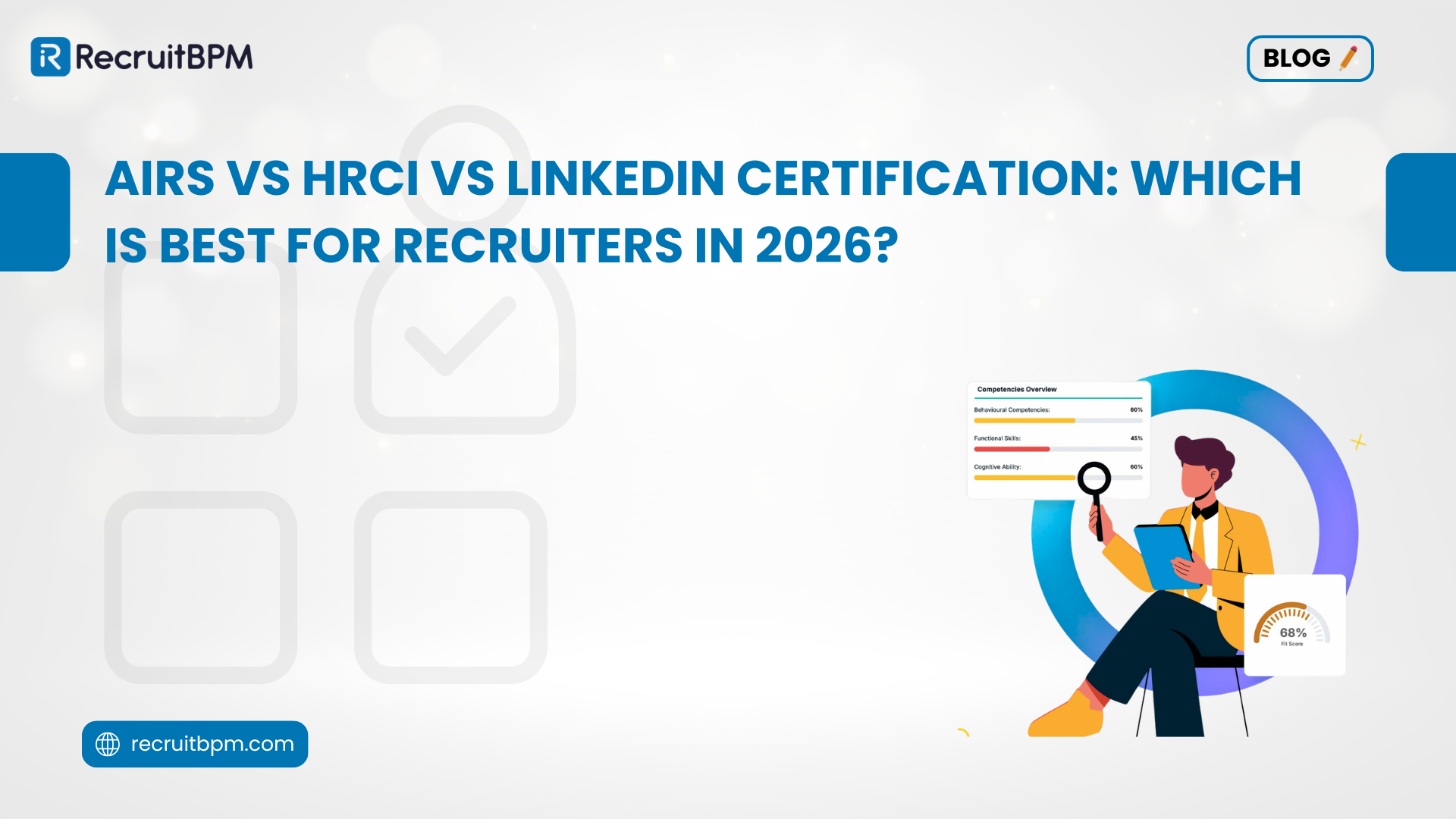
There are more recruiter certifications available today than at any point in the history of the profession. That’s a good problem to have until you’re trying to decide which one is worth your time and money. AIRS, HRCI, and LinkedIn are the three most commonly compared options. Each carries real brand recognition. Each covers different
Most staffing agencies track placements. Fewer track the pipeline that produces them. That distinction matters more than it might seem. Knowing you made 30 placements last month tells you what happened. Knowing your submission-to-interview rate dropped from 68% to 42% tells you something is wrong in your screening process and gives you a chance to
Most staffing agencies using a recruitment CRM are using it at 30 percent of its potential capacity. Either the platform doesn’t fit their workflow, the features they need are locked behind expensive add-ons, or the system was bought for one purpose and pressed into service for another it wasn’t designed for. The recruitment CRM landscape